The Mr. Copper Corner: Anatomy of the $2.6B Sumitomo Copper Affair
Desk Reference: TCR-FF-2026-005
Category: Base Metals & Market Abuse / Authorization Fraud
Primary Source Record: CFTC administrative order against Sumitomo Corporation (Release #4144-98, 1998, record $125M manipulation settlement) and Tokyo District Court judgment of March 26, 1998 (conviction of Yasuo Hamanaka for fraud and forgery)
Primary Assets: LME Copper Grade A futures positions and physical LME warehouse warrants
Documented Financial Loss: ~$2,600,000,000 USD in unauthorized trading losses, plus ~$200,000,000 USD in subsequent settlements
⚠ Pre-Flight Desk Alert: Accepting a Counterparty's Own Paperwork as Proof of Authority? Authorization documents, position statements, and inventory confirmations produced inside a counterparty's own front office carry extreme documentary risk when no independent party re-verifies them. A signature is a control only if someone independently confirms the signer's authority, and an inventory is collateral only if someone independently audits the metal. Before extending credit or finance against a counterparty's self-reported book, submit the structure to The Commodity Room Forensics Desk for an independent 25-point audit.
1. Case Docket: The $2.6B Sumitomo Copper Affair
For over a decade, Yasuo Hamanaka was the most feared copper trader on the London Metal Exchange. Known in the market as "Mr. Copper," the chief copper trader at Sumitomo Corporation, one of Japan's largest sogo shosha trading houses, carried a reputation for being able to move the world copper market at will. In June 1996 that reputation collapsed: Sumitomo disclosed that Hamanaka had run roughly a decade of unauthorized copper trades, concealed from the firm, and that the losses reached $2.6 billion.
The court record that followed defined the case's legal character. In March 1998, the Tokyo District Court convicted Hamanaka on charges of fraud and forgery, sentencing him to eight years in prison. The court found he had defrauded Sumitomo's own Hong Kong subsidiary out of approximately $770 million and had forged the signatures of supervisors on trading authorization documents to conceal the true scale of his positions. On the regulatory side, the U.S. Commodity Futures Trading Commission found in its 1998 order that Sumitomo had manipulated upward the price of copper and copper futures, and the firm paid a then-record $125 million settlement, alongside a £5 million payment to the UK's Financial Services Authority.
The mechanism at the center of this case is distinct from every other autopsy in this archive. Qingdao was about pledged metal that was never uniquely owned. The Midnight Cargo Swap was about metal that stopped being metal. The Trafigura nickel case was about paperwork describing containers that held something else. The Sumitomo affair is about a different forgery entirely: the falsification of the internal authorization layer itself, the documents a trading house relies on to know what its own book contains, combined with an attempt to corner the physical market through accumulated LME warrants.
2. The Anatomy of the "Authorized" Copper Corner
The deception operated in four stages.
Stage 1: The Authority Layer Forged
Hamanaka's position gave him the standing to trade copper on Sumitomo's behalf, but not without limits. His response to those limits, as established by his Tokyo conviction, was to forge supervisors' signatures on the authorization documents that were supposed to cap and control his trading. The control system did not fail because it was absent. It failed because its evidence was produced, or reproduced, inside the same office it was meant to police.
Stage 2: Concealment Through the Off-Books Structure
Unauthorized positions on that scale cannot sit in plain view. Losses were channeled through Sumitomo's Hong Kong subsidiary, keeping them off the consolidated view that Tokyo's risk managers were supposed to see. The court's $770 million fraud finding against Hamanaka's own firm's subsidiary describes the second stage of the mechanism: the physical book of a regulated trading house, and the shadow book that hid what the physical one was actually doing.
Stage 3: The Squeeze Physicalized
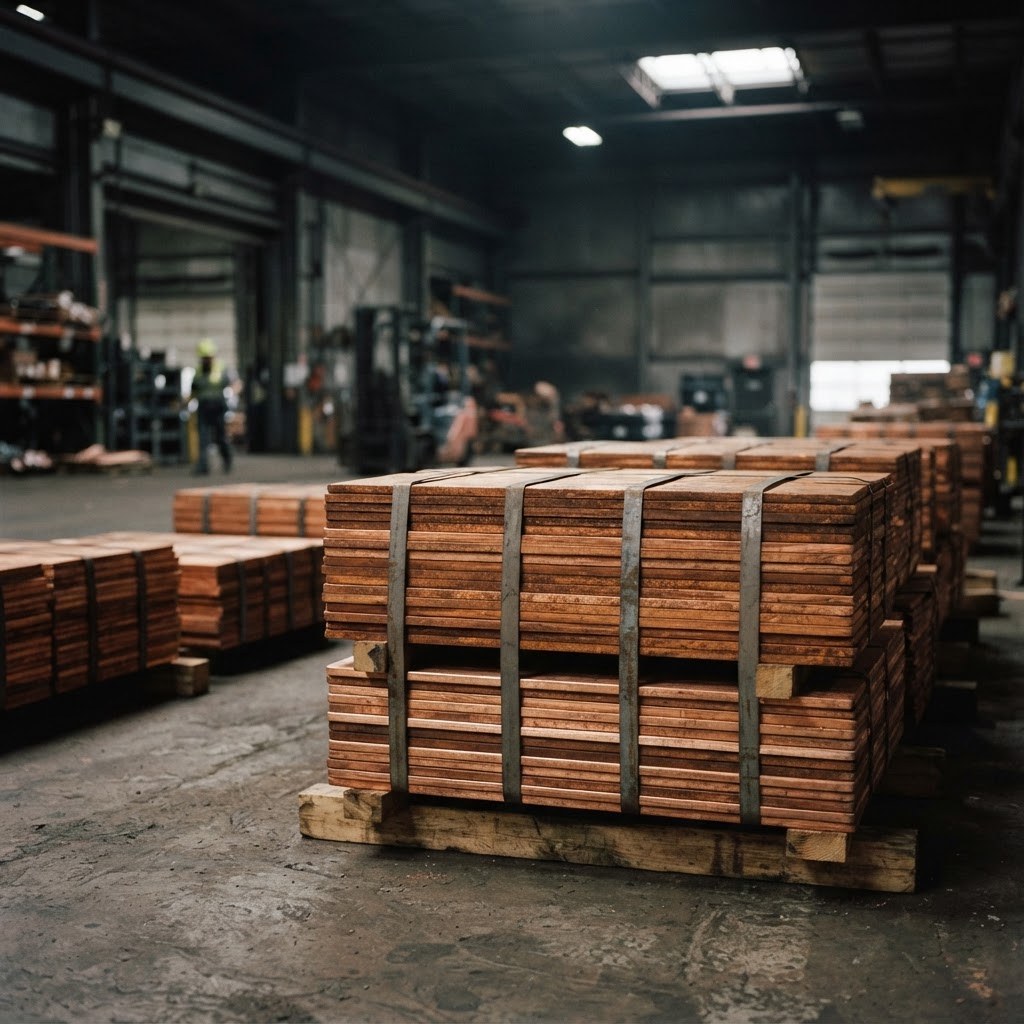
A corner requires control over deliverable supply. Hamanaka accumulated physical copper warrants and large futures positions, aiming to hold influence over the LME copper market that other participants could not exit against. Financing supported the structure: Merrill Lynch alone extended approximately $500 million in loans used to purchase copper warrants and roughly $100 million in commodity inventory purchase obligations, per the record of the subsequent regulatory and litigation fallout.
Stage 4: The Doubling-Down Loop
From the mid-1980s to 1996, losses were not crystallized; they were rolled. Positions were extended and re-extended in an attempt to recoup prior losses, the classic escalation pattern that converts a manageable breach into a firm-level catastrophe. The scheme ended only when regulatory scrutiny of the copper market's oddities became too intense, positions were liquidated, and Sumitomo disclosed the loss.
Structural Deal Mechanics at a Glance
Declared Paperwork (What the Documents Said) | Physical Reality (What Was Actually Happening) |
Signed trading authorizations imposing position limits | Signatures forged by the trader being limited; limits fictional |
Sumitomo's reported copper book, visible to management | Unauthorized positions and losses channeled through the Hong Kong subsidiary |
A trading house executing hedging and merchant flows | An attempted corner of world copper supply via warrants and futures |
Counterparty banks financing "physical copper inventory" | Collateral narrative sustained by the borrower's own representations, without independent physical audit as a condition |
The market's read: "Mr. Copper" speaks for the copper market | A single individual's unauthorized positions setting apparent market reality for a decade |
3. Forensic Analysis: Where Operational Controls Failed
A. The Signature That Was Never Re-Verified
Every trading house of the era ran on authorization paper: limits signed by supervisors, confirmations countersigned, mandates renewed. The forensic failure is subtle and important: a document whose provenance is checked only within the reporting line it certifies is not a control, it is a ritual. Sumitomo's authorization layer was verified by the same organizational channel that Hamanaka dominated. The lesson for any desk is structural: the authority evidence behind a counterparty's promises must be capable of being independently re-verified, or it must be treated as decoration.
B. The Star Trader and Segregation Failure
Hamanaka's nickname was not an insult; it was a warning light. A single individual with a decade of dominance, a reputation for moving the market, and control over the information flow about his own book is the textbook concentration risk. The failure mode is cultural as much as procedural: results deference. A profitable trader's paperwork is checked less, not more, precisely because the outcome seems to justify the autonomy. Segregation between front-office execution and independent middle-office verification is the only structural answer; Sumitomo's Hong Kong structure made the trader, in effect, his own control function.
C. Financing Without an Independent Physical Audit Trigger
The banks that financed the structure, most prominently Merrill Lynch, extended hundreds of millions against copper warrants and purchase obligations. After the collapse, the LME and the CFTC fined Merrill a combined reported total of roughly $25 million in 1999 for conduct connected to the financing, and Sumitomo pursued its own litigation against several financing banks. The forensic point is not that lenders were complicit; no regulator found them to be. It is that finance flowed against a collateral narrative ("copper warrants held by a blue-chip house") in which no independent physical audit of the financed inventory was a non-negotiable condition of lending. A warrant is a strong document. A warrant whose backing metal is never independently examined is a strong document resting on the borrower's word.
4. Audit Cross-Check Against The Commodity Room 25-Point Protocol
Evaluating the Sumitomo structure against our institutional protocol reveals critical failure points across all four layers:
Audit result by layer:
Layer 1 — Counterparty: CRITICAL FAIL (Points 1 & 4)
Layer 2 — Incoterms: FAIL (Point 9)
Layer 3 — Proof of Product: CRITICAL FAIL (Points 11 & 12)
Layer 4 — Banking Rails: CRITICAL FAIL (Point 19)
Layer | Protocol Check | Forensic Finding in Case Docket | Risk Rating |
Layer 1: Counterparty | Points 1 & 4: UBO & Entity Relationship Screening | The position structure routed exposure through a subsidiary cluster (Sumitomo Hong Kong) controlled within the same beneficial-owner perimeter as the trading book, obscuring consolidated exposure from the firm's own risk view. | CRITICAL FAIL |
Layer 2: Incoterms | Point 9: Point of Delivery vs. Physical Control | Financed LME warrants conferred paper title to copper without any party independently verifying the physical stock underlying the accumulated position. | FAIL |
Layer 3: Proof of Product | Points 11 & 12: Independent Product Verification | No independent, concurrent audit of the physical inventory or position statements existed as a payment or financing trigger; the only evidence of the book was the trader's own paper. | CRITICAL FAIL |
Layer 4: Banking Rails | Point 19: Strict Documentary Alignment | Financing was extended against self-reported position and inventory documentation without requiring independent physical verification as a non-negotiable condition of the credit. | CRITICAL FAIL |
5. Operational Takeaways for Independent Traders & Desks
The Tokyo and CFTC records reinforce fundamental principles for anyone extending credit, finance, or trust against a counterparty's self-reported book:
An Authorization Is Not a Control Until Independently Re-Verified. Forged authority documents defeated one of the world's most sophisticated trading houses. When assessing a counterparty, treat their internal paperwork as claims, not evidence, and require third-party verification of anything that matters: authority, inventory, and position.
Star-Trader Deference Is a Structural Risk. Any desk where one individual dominates results, information flow, and relationships is a desk where the control system has already been softened. Check the profitable counterparty's paper more, not less.
Financed Inventory Demands Physical Audit. When your exposure is secured on copper warrants, the metal is your protection. Make independent physical inspection and assay a condition of the facility, at your appointment, not the borrower's.
Watch the Off-Books Shadow. Positions routed through subsidiaries, associated entities, or unfamiliar jurisdictions deserve consolidated-exposure questions. If you cannot see the whole perimeter, you are seeing the story the counterparty chose to show you.
Escalation of Commitment Is a Fraud Accelerant. The decade-long pattern of rolling losses forward is common to nearly every case in this archive. A counterparty or colleague who will not crystallize a small loss is showing you how a large one gets built.
📁 Desk Toolkit: The Physical Commodity Starter Suite — Protect your transactions with institutional legal drafting. Our suite provides ICC-compliant NCNDA/IMFPA templates, ICPO formats with inspection milestones, and the complete 25-Point POP Audit Checklist. Instant Access • Professional Word/PDF Template
🎓 Accredited Desk Training: Letters of Credit & UCP 600 — Avoid documentary traps and understand how banks examine commercial transport documents before payment. Ideal preparation for CDCS and CTFP certification.
The Commodity Room is an independent media, educational, and document risk assessment platform. Content published on this site does not constitute formal legal counsel, investment advice, trade financing, banking guarantees, or physical marine inspection services. All parties must execute independent due diligence through licensed legal counsel and certified inspection agencies.
Primary Citations & Reference Records
Commodity Futures Trading Commission: Release #4144-98, administrative order finding that Sumitomo Corporation manipulated the price of copper and copper futures (1998), including the then-record $125 million settlement (cftc.gov).
Tokyo District Court judgment of March 26, 1998: conviction of Yasuo Hamanaka for fraud and forgery, including findings on forged supervisor signatures and approximately $770 million in fraud against Sumitomo's Hong Kong subsidiary, as reported contemporaneously by The New York Times ("Former Copper Trader Gets 8 Years in Prison," March 26, 1998) and The Japan Times ("Rogue Copper Trader Draws Eight-Year Prison Term," March 26, 1998).
Commodity Futures Trading Commission: Release #4265-99 (Docket #99-11), complaint regarding the culmination of the copper price manipulation scheme (cftc.gov).
The Guardian: "Merrill fined £16m for role in copper scandal," July 1, 1999, reporting LME and regulatory fines against Merrill Lynch and Sumitomo's CFTC and FSA penalties.
BBC News: "Bank fined over copper scandal," July 1999, reporting the LME's record fine arising from the Sumitomo copper affair.
In re Sumitomo Copper Litigation, 995 F. Supp. 451 (S.D.N.Y. 1998), United States District Court, Southern District of New York.


Comments