The Great Aluminum Queue: The 2013-2014 LME Warehouse Controversy and What It Revealed About Warrant Liquidity
Every commodity trader is told the LME warrant is as good as gold: title to metal, freely transferable, liquid paper. For one period in the early 2010s, the aluminum market put that claim through a stress test the industry still studies. Owners of LME aluminum discovered that holding a warrant to metal in a Detroit warehouse meant waiting over a year to physically touch it, while paying rent on every intervening day, and that the party collecting the rent often had commercial reasons to keep the queue long. The 2013-2014 LME warehouse queue controversy is not a fraud autopsy: no court found a fraud. It is something more useful for a trading desk: a documented case of how a market structure can be legally gamed, and what the word "liquidity" turns out to mean when physical delivery is the bottleneck.
How LME Warehousing Is Supposed to Work
The London Metal Exchange maintains a network of approved warehouses around the world. Metal delivered into that network against an LME short position is held against warrants: bearer documents of title, each representing a specific parcel of metal in a specific warehouse. The exchange's core promise is that a long position can be closed by warrant delivery, and a warrant holder can cancel the warrant, take delivery, and load the metal out.
Two revenue facts drive everything. The warehouse charges rent on every tonne, every day, from the moment metal enters until it loads out. And the warehouse operator, while exchange-approved, is a private company with private owners. By the early 2010s several of the largest operators were owned by banks and trading houses, a fact that would become central to the controversy.
How an Eighteen-Month Queue Got Built
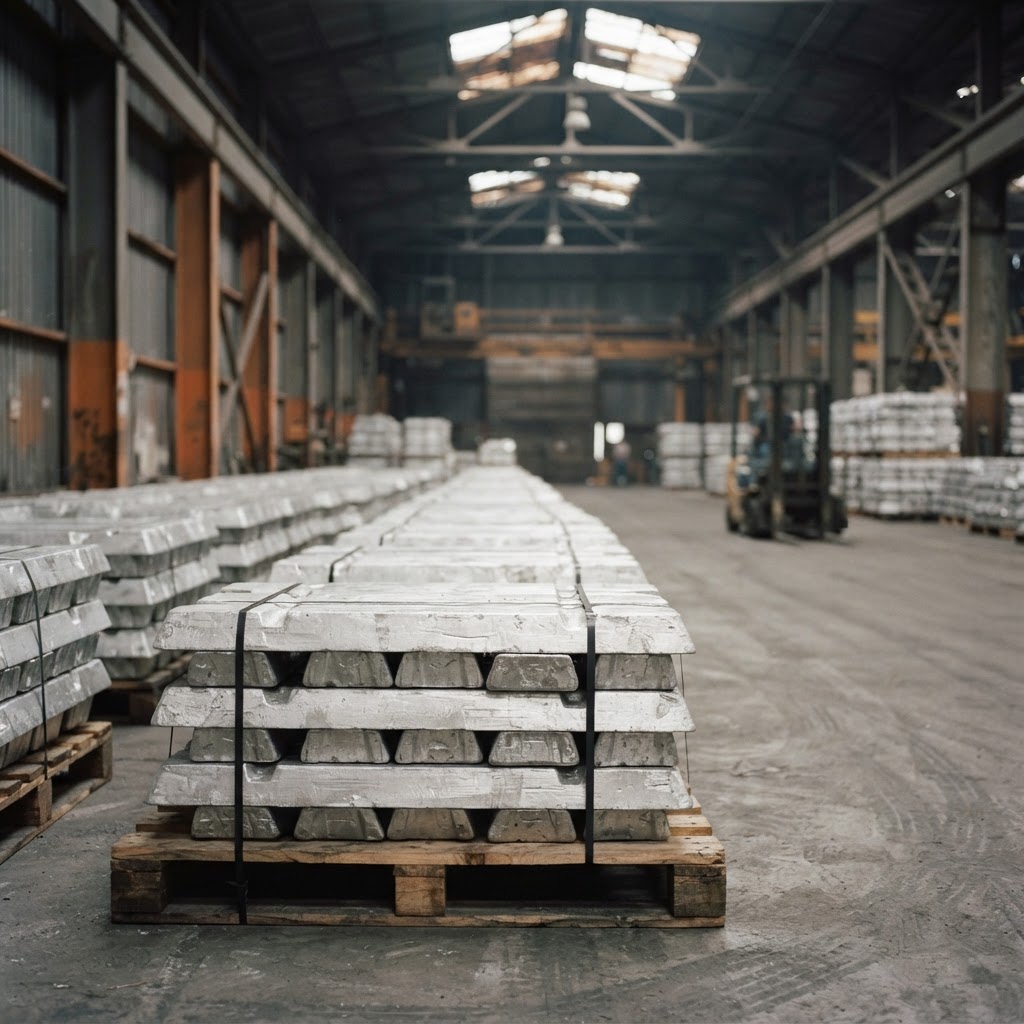
The rules required each warehouse site to load out a minimum tonnage per day. But that minimum was a floor, not a service-level promise, and it said nothing about the rate of metal flowing in. Operators controlling sites in Detroit and Vlissingen, the two that became famous, kept loading in metal at a pace far exceeding required load-out. The arithmetic is mechanical: if inflow roughly matches or exceeds the daily load-out obligation, the queue of warrant holders waiting for physical delivery grows. By 2013-2014 the Detroit queue stretched beyond eighteen months at its peak. A manufacturer cancelling a warrant could wait well over a year for the metal it legally owned.
The Rent Math That Made Waiting Profitable
Why would a warehouse operator want a queue? Because rent accrues per tonne per day, and a longer queue means more tonne-days of rent on every tonne parked in the shed. A queue transforms metal that would otherwise load out in days into an annuity.
The owners made it worse in the market's eyes. Goldman Sachs owned Metro International, the Detroit operator; Glencore owned Pacorini Metals, the Vlissingen operator. Both were buy-side giants in aluminum as well as warehouse landlords. The structural conflict was obvious: a trading firm that is long physical aluminum benefits from tight physical availability, and its warehouse subsidiary benefits from slow throughput. No regulator ever proved that inflow was engineered as a scheme, and the firms denied improper conduct. But the incentive alignment was undeniable on paper, and it was exactly what the consumers began saying out loud.
The cost landed on industrial buyers. Premiums, the amount paid above the LME cash price for physically delivered metal, decoupled from the exchange price. The US Midwest premium roughly quadrupled between 2010 and 2014, peaking in the region of a record above $450 per tonne. Consumers were paying record premiums for metal that the LME price said was in massive surplus, sitting in queues they were also renting.
What the Queue Revealed About Warrant Liquidity
The episode is required reading because it stress-tested the assumptions a desk makes about exchange paper:
Assumption before 2013 | What Detroit and Vlissingen showed |
A warrant is fungible metal: take delivery whenever you want | A warrant is a right to join a queue, whose length is set by the operator's inflow decisions |
Warrant liquidity equals physical liquidity | Paper changed hands freely while physical availability stayed artificially scarce |
Warehouse operators are neutral infrastructure | Operators can be affiliates of traders and banks with positions in the same metal |
Exchange price reflects physical market | The LME price reflected metal in queues, while consumers paid a decoupled physical premium |
Coca-Cola, buying aluminum for cans, complained publicly to the LME in 2011 about the queues. US Senate committees held hearings into bank ownership of commodity infrastructure in 2013 and 2014. RusAl, itself a major aluminum producer that stood to benefit from tighter physical supply, sued the LME over its proposed rule changes and lost in the High Court in 2014. The story reached mainstream economics coverage because it was the rare commodities controversy that a general audience could understand: the stuff was there, you owned it, and you still could not have it.
What Actually Fixed It
The LME's remedy was a rule change in load-out requirements: linking the tonnage a backlogged warehouse must ship out to the tonnage it takes in, with targets designed to wind queues down, effective from 2015 for congested sites, followed in later years by queue-cap policies that set hard delivery-time expectations on operators. The queue incentive survives structurally: rent is still paid per day, operators are still private, and financing deals still tie up metal in warehouses. But the load-in/load-out linkage made queue-building self-limiting, and the Detroit and Vlissingen queues unwound through 2015-2016, taking the physical premium down with them. Goldman sold Metro in 2015.
The Safeguard: Read the Queue Before You Buy the Warrant, Broken Down
The desk takeaway is a checklist to run before treating warrants or warehouse-backed metal as equivalent to available metal:
1. Check the queue at the specific warehouse, not the network average. The LME publishes queue and load-out data by location. A warrant in a low-queue location and one in a congested one are different instruments wearing the same name.
2. Ask who owns the operator, and what else they trade. Affiliate ownership is public knowledge. A warehouse operator owned by an active trading house means your delivery queue and your counterparty's physical book may not be indifferent to each other.
3. Price the rent and the time into the deal. Rent per tonne per day times queue length is a real cost of taking delivery. A warrant bought at a discount that spends six months in a queue can be a worse deal than paying a premium for immediately available metal.
4. Contract around the bottleneck. For physical offtake, specify delivery location, load-out timelines, and remedies for queue delays. Never let a contract treat "ex-warehouse" as a single undifferentiated term.
The 2013-2014 queue never involved a forged document. It is on this desk's reading list precisely because the failure was subtler: market paper that stayed liquid while the metal behind it stayed still, and a revenue structure that paid the landlord for exactly that.
References & Source Records
London Metal Exchange (lme.com): published warehouse queue, stock, and load-out data; 2013-2014 warehousing rule consultation and load-in/load-out policy changes.
US Senate committee hearings and reports on bank ownership of commodity warehousing and physical flows (2013-2014).
United Company RusAl v The London Metal Exchange, High Court of England and Wales, judgment 2014 (challenge to the load-out rule changes; LME upheld).
LME US Midwest aluminum premium series (public market data) documenting the 2014 record and subsequent 2015-2016 collapse.

Comments